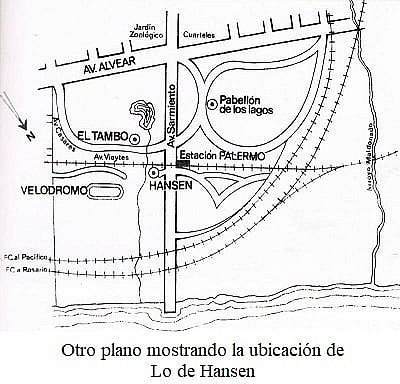
Hansen's restaurant, was the most famous of the nightlife venues in Buenos Aires from the last decade of the 19th century until 1903. It was a point of reference for the performance of a whole generation of musicians and the best tango dancers of the time arrived there. It was located in the heart of Parque Tres de Febrero, in the Palermo neighborhood, with an entrance on Sarmiento avenue between the railroad tracks and Vieytes avenue.
Those were public lands and there, in 1869, the Municipality of Buenos Aires had built a beautiful gazebo that housed a restaurant on land that had belonged to Juan Manuel de Rosas, with the idea of leasing it to individuals. It was called “Palermo Restaurant” and its design reproduced that of large open-air restaurants, which were fashionable in Europe at that time.
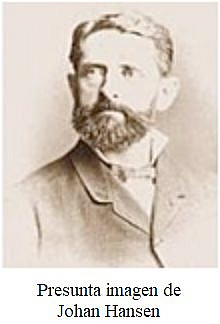
This restaurant was operated with greater and lesser success by different concessionaires, until, in 1875, a German born in Hamburg named Johan Hansen appeared on the scene, who, as a new consignee, gave the place a new imprint, so that from then no one spoke of the Palermo Restaurant anymore, but they referred to it as "The Hansen thing”
The truth is that "the Hansen thing”, it was not just a restaurant: Showing a luxury never seen before in a restaurant, it was a mixture of “sumptuary brothel and Tango mecca”, as well as a restaurant. A not very holy precedent of the "cabarets" that followed to illuminate the nights of Buenos Aires.

It was a meeting place for "bacanes" and "malandras", for patoteros and breakdown people. Of dancers and "cafishios", who mixed without shame, with representatives of the snob aristocracy, who was delirious to live those exciting nights that were offered to him in "Lo de Hansen". Because there they saw tango dance well, there they could listen to the best "typical" orchestras of the moment; enjoy the very pleasant company of beautiful "coperas" that made them feel that they were, what they could never be and forget, even for one night, a sad and boring life.
But the fundamental thing was that there was action there. Because fights with a bare fist or wielding a knife were a common and frequent thing. The challenges, the baleful glances, the "squeezing" of an absent-minded man who dared to invite the brown Bazán "mine" to dance, or the fight between women who wanted the same man, were the seasoning of those exciting nights, which attracted a heterogeneous audience that used to fill the venue's capacity, knowing that it was possible to stay away from that world and that while dancing some beautiful tangos, one could enjoy excellent drinks and first-class gastronomy service.
“Lo de Hansen” became fashionable and there were the most brilliant figures of the show, of the arts, of music and of politics. The most famous Tango orchestras that record the history of our popular music, the best singers and singers played there. There he danced "el Cachafaz" and even some Argentine President was encouraged to "cuts" on his dance floor. During those years, there was no illustrious visitor who was not tempted to discover what was talked about in a low voice in the most mundane halls of Europe. One night he was visited by the great Italian soprano Adelina Patti, who did not want to leave the country without spending a few hours in that authentic environment where one of the first milongas was born.
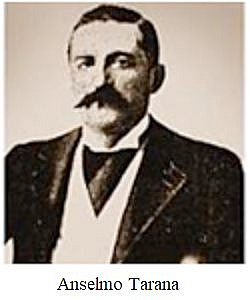
After Hansen's death in 1892, it had several owners, the first being Enrique Lamarque, until, at the end of 1903, the concession for the place was granted to another immigrant: this time it was Anselmo R. Tarana from Lombardy. From that act “Lo de Hansen” changed its name, it began to be called “Recreo Palermo Restaurant. Old Hansen” or also “El café Tarana”.
Tarana had five cars with which customers were taken and returned to their homes free of charge (if you drink, don't drive).
The issue of whether or not the tango was danced in “Lo de Hansen” is quite controversial.
Félix Lima, en un artículo de la revista «Caras y Caretas» escribe: «Con frecuencia volaban los sifones, las copas, las botellas y las sillas. A veces tiros y puñaladas. Más de un taita pasó al otro mundo desde el escenario del Hansen en viaje directo, ‘senza tocare’ el hospital.» … «Estaba prohibido el bailongo, pero a retaguardias del caserón de Hansen, en la zona de las glorietas, tangueábase lindo, tangos dormilones, de contrabando. … » ‘La Morocha’, el tango de Saborido, tocábase vuelta a vuelta, se encontraba en el apogeo de su popularidad. La orquesta nocturna era de línea. ‘Pas’ de bandoneón. El fuelle todavía no habíase hecho presente en público. Los tangos de Bassi y Villoldo – El Incendio y El Choclo – abríanse cancha. ‘Unión Cívica’, el mejor tango del compositor Santa Cruz, también estaba de moda…». Nos referimos a la época dorada del Hansen, desde 1903 a 1908.
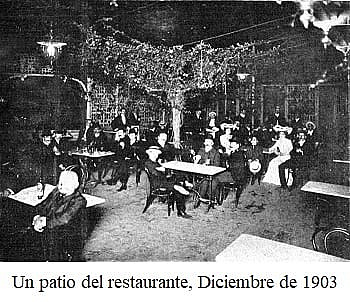
Alfredo Taullard en su libro «Nuestro Antiguo Buenos Aires» (Peuser, 1927) lo describe: «El Hansen tenía aspecto de merendero andaluz y cervecería alemana. Desde varias cuadras, a media noche, descubríase su ubicación por las líneas de luces de los faroles de los carruajes y los farolitos de colores que alumbraban las glorietas. En esas glorietas cenábase, entre risas y farándulas, y en el gran patio los parroquianos bebían baja un techo frondoso de glicinas y madreselvas olorosas. La orquesta tocaba milongas, polcas y valses».
En cambio, el «cajetilla» Adolfo Bioy (padre) en «Antes del 900 (Relatos)» expresa «… Allí se bailaba el tango, antes que esta danza hubiese alcanzado a estar de moda en los salones de la ciudad, allí íbamos de cuando en cuando a ejecutar nuestras cualidades de calaveras, a riesgo de incidentes con los malevos que en ese antro pululaban».
Leonardo Benarós recounts that Roberto Firpo used to say: “I played at Hansen's in 1908. Some say that they danced. Is a lie. It was played so that it could be heard, although perhaps, one or the other, would take a few turns in a hidden roundabout”, but he also says that on December 16, 1961, he interviewed Felipe Amadeo Lastra, an old criollo horse breeder, already in his eighties, who insisted vehemently that “at Hansen's there was no dancing. Where was he going to dance? Among the trees?
Miguel Ángel Scenna, relata que Lastra, decía que “lo de Hansen, durante el día y hasta las once de la noche, era un pacífico restaurante, pero que, a partir de esa hora, empezaban a llegar los paseantes nocturnos. Si llovía, no había Hansen. En ese patio había un sinnúmero de mesas de mármol de forma rectangular y basamento de hierro, por lo tanto eran bastante pesadas y difíciles de mover. Circundándolo, había glorietas con enrejado pintado de verde. A la hora mencionada, empezaban a llegar en carruajes, los parroquianos que, desde que descendían de ellos, lo hacían entre policías uniformados y pesquisas en gran cantidad, ya que, de no ser así, todas las noches, aquello hubiera resultado un campo de Agramante. La concurrencia estaba integrada por «compadritos» y “gaviones”. También concurrían “niños bien” y escasos comerciantes con veleidades de juerguistas, lo mismo que ganaderos que se tomaban vacacioncitas. A Jorge Newbery nunca lo vimos allí; él era deportista. En ese local no se bailaba. Estaba prohibido, como en todos los sitios públicos”.
Incredible but real
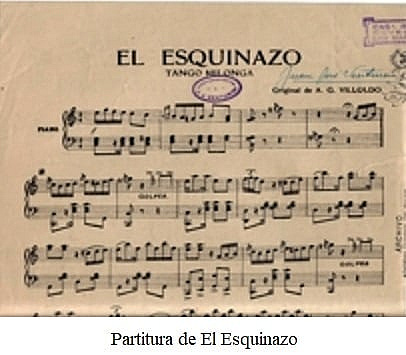
El famoso compositor Ángel Villoldo, creador de éxitos como «La morocha» o la música de «El choclo», estrenó «El Esquinazo» en el Hansen. Cada noche, cuando se tocaba esta pieza, los asistentes marcaban el ritmo aplaudiendo. El entusiasmo iba creciendo y a los aplausos se sumaba un leve golpeteo sobre las mesas. Luego taconeaban sobre el suelo. El público aumentaba la temperatura con esta milonga y pedían bises: llegaron a tocarse siete veces en una misma noche. El golpeteo rítmico que acompañaba al “endiablado tango”, como lo definió Pintín Castellanos, pianista y compositor uruguayo, creció hasta convertirse en golpes de vasos, copas y hasta sillas que volaban por el local, Tarana, cansado ya de tantos destrozos hizo poner un cartel que decía: “Terminantemente prohibida la ejecución del tango El esquinazo. Se ruega prudencia en tal sentido”.
In 1908 the business was transferred to the Payot and Giardino company that managed it until 1912, the year that coincided with the administration of Joaquín S de Anchorena when the cafe was closed and demolished. And so ended "the thing with Hansen" and with it, a time and a way of living life that will never return.
En 1937 el compositor de tango y director de cine Manuel Romero presentó la película «Los muchachos de antes no usaban gomina», con el inolvidable actor Florencio Parravicini (como Ponce), donde las escenas transcurren en gran parte en «Lo de Hansen». Además, compuso el tango «Tiempos Viejos», con música de Francisco Canaro (1926), y que dice:
Do you remember, brother, the blonde Mireya
What did I take from the handsome Rivera at Hansen's?
I almost killed myself one night for her,
and today she is a poor ragged beggar…!
Do you remember brother, how pretty she was?
A wheel was formed to see her dance!
When I see her so old on the street,
I turn my head and start crying...
It is not clear if the blonde Mireya existed, but there is no doubt that she embodied the women who went to the Hansen to meet men, very well dressed and with expensive jewelry.
The “chupping-house” of Palermo, as defined by the journalist Félix Lima, accompanied the initial growth of the Tres de Febrero park as a place of recreation for the locals, becoming a milestone in the history of Buenos Aires.
Compilation of texts and images: The chest of history; The nation; ultimatanda.it; Tango history; cafecontado.com; acciontv.com.ar
 English
  Español
  English (UK)
  Português do Brasil
  Français
  Italiano
  Deutsch
  简体中文
简体中文  العربية
  Русский
Leave a Reply