Rachel Liberman she died in 1935. Thyroid cancer had consumed her. He no longer spoke. The agony was short but very painful. Before she fell ill, her appearance was not good either. He was 35 years old, but appeared to be in his fifties. He was a worn-out, broken person. With a past that did not abandon her, with perpetual pain going through her. However, she was a quiet woman. He had fought, he had not given up despite the adverse circumstances and he had won. Against all odds.
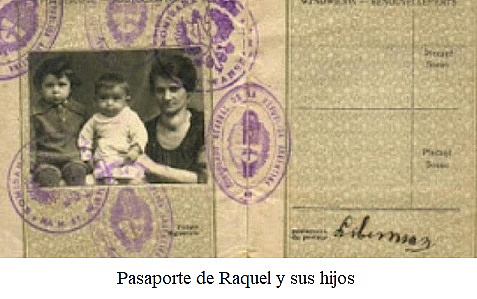
Ruchla Laja Liberman He was born on July 10, 1900 in Berdichev, present-day Ukraine. As a child, she emigrated with her parents to Warsaw, where she spent more than two thirds of her short life. In 1919 she married Iaacov Ferber and the following year they had their first son, Joshué. In 1921, when she was pregnant with her second child, her husband immigrated to Argentina in search of work. But his final years (and the name he adopted during them) are what gave him immortality. Her destiny was to go unnoticed, to be subjected, one more victim, like so many thousands of others. But she refused, rebelled. And with unusual courage, he stood up to his exploiters.
He inspired -with many historical licences- the character played by Eugenia La China Suárez in Argentina, land of love and revenge.
At the beginning of the last century, life in Poland was very hard. Hunger, needs and pogroms. For the young Jews, any exit seemed tempting, any other destination in the world offered illusion.
Ruchla como tantas otras jóvenes polacas judías partió hacia Argentina buscando un futuro mejor, escapar a la miseria. Pero su historia no es igual a la de las demás. «La Polaca» emigró a la Argentina en 1922 junto a dos pequeños hijos -Josué de dos años y Moisés de meses- para reunirse con su esposo, que la esperaba en la localidad bonaerense de Tapalqué. Elke, la cuñada de «la Polaca», era la madama de un burdel. «No se sabe si Raquel sabía de esto antes de llegar al país o si creía que iba a trabajar ayudando a su marido, que era sastre, pero nunca había conseguido trabajo y vivía de su hermana.”
Shortly after tuberculosis caused the death of Iaacov. Ruchla, who upon arriving in Argentina adopted the name of Rachel Liberman, (the names of immigrants used to be Spanish) left her children in the care of people from Tapalqué and settled in Buenos Aires ready to earn a living. Prostitution, a mark of the time, was a path almost impossible to avoid.
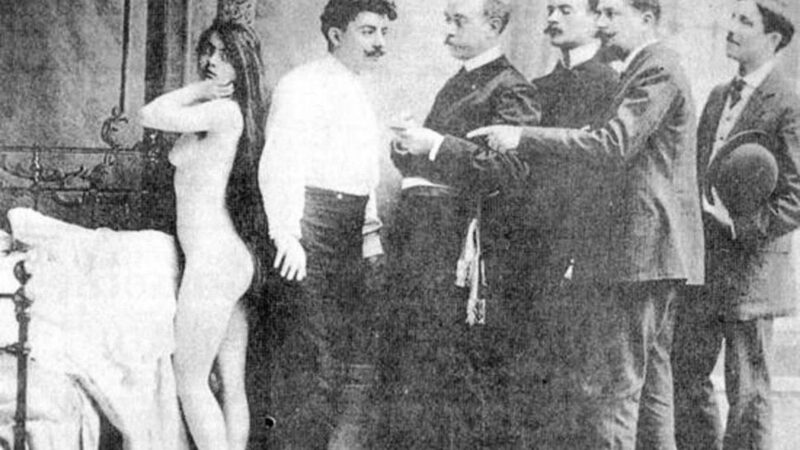
Ruffians moved throughout Buenos Aires. They were of all origins. Italians, Spanish, French, Jews. The organization that over time gained the most fame was the Zwi Migdal, of Polish Jewish origin.
Rachel Liberman he worked for several years in the brothels of the Zwi Migdal. Her agreement was better than the rest of the girls. He kept a higher percentage. Thus, he was soon able to buy his freedom in $1,500.
He continued to practice on his own. She married José Korn, considered by many to be an envoy from the Zwi Migdal to make her fall back into their clutches. Nobody manages to free themselves easily from these mafia associations. This man scammed Raquel. He acquired a house in her name with 60,000 pesos from her, in a fraudulent maneuver. Korn installed in that house, how could it be otherwise, a brothel. Raquel was left, once again, with nothing. And his search for justice began.
The downfall of that prostitution emporium, which grossed millions a year, began in this little scam that the cracked thirty-year-old decided not to forgive. Ambition and impunity lost the Zwi Migdal. He came across a determined woman tired of harassment, a principled commissioner and a judge who did not fall into the temptation of venality.
Raquel had the same fate as the other Polish girls: giving up her youth to ruffians and clients, growing old prematurely, becoming bored with life, and being replaced by a younger one, perhaps barely five years younger than her, but without the obvious wear and tear. , without the rictus of defeat chiseled on his face, without the marks of exploitation furrowing his body.
The woman claimed her money. That money was his independence. The paradox is that she managed to put an end to the organization of ruffians and wanted, with her savings, to become a madam herself. They did not hear their requests. Neither her ex-husband Korn nor the directors of the Zwi Migdal to whom she went. Then she denounced the scam, but no one believed that the Justice would listen to her. Who would pay attention to a Polish prostitute? What kind of investigation couldn't they stop with some timely bribes?
Commissioner Julio Alsogaray, a moralist and with a reputation for incorruptibility, listened to Raquel and started to move: he had been behind the organization for years and always ran up against the wall of silence and complicity. With nobility, Alsogaray warned Raquel of the risks of ratifying her denunciations. Raquel chose to move on. It found an echo in an honest judge, magistrate Manuel Rodríguez Ocampo.
For the complaint to prosper, Raquel lied about her origin. He wanted to protect his children. He just followed the script of the legend. She said that she traveled seduced by a deceitful marriage proposal and that when she disembarked at the port she was kidnapped and forced into prostitution.
Como escribió Jorge Luis Borges sobre su Emma Zunz: «La historia era increíble, en efecto, pero se impuso a todos, porque sustancialmente era cierta. Verdadero era el tono, verdadero el pudor, verdadero el odio. Verdadero también era el ultraje que había padecido; solo eran falsas las circunstancias, la hora y uno o dos nombres propios.»
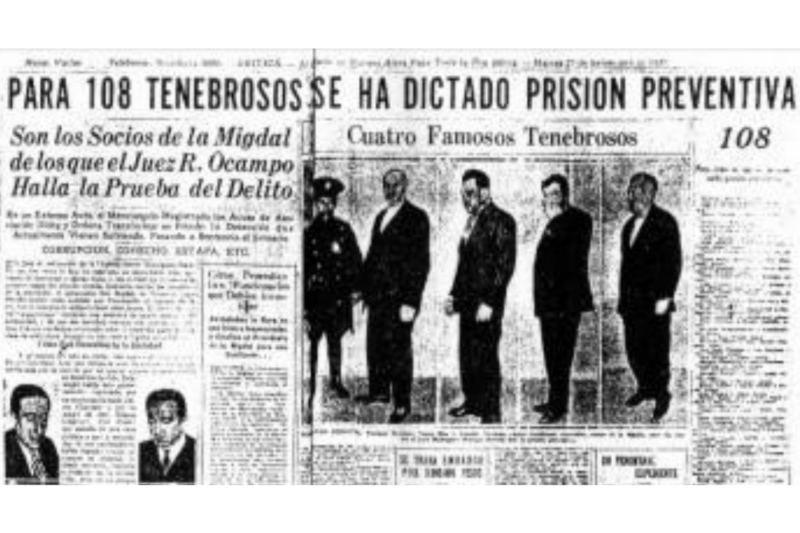
Raquel, que comenzó solo reclamando su deuda, terminó denunciando y describiendo el funcionamiento de la red criminal. La Zwi Migdal no pudo resistir el embate. El juez ordenó 108 detenciones. La justicia de aquella época -en las vísperas de la llamada «década infame»-, a través de la Cámara de Apelaciones, finalmente dejó bajo el régimen de prisión preventiva a solamente tres miembros secundarios de la organización. Todos los demás, fueron liberados. Pero las circunstancias hicieron que el emporio de los rufianes fuera demolido.
Public opinion was becoming more moralistic (in 1936 prostitution was outlawed: Raquel never got to see him, she died the year before). The impact of the news and sensationalism gave it a great impact and the anti-Semitic factor also played a role. Larger and more established prostitution networks were bypassed because they belonged to other communities.
With her complaint, Raquel had caused the fall of the Zwi Migdal. It was an unintended consequence. For years the story of the trip, of the fraudulent marriage, of the scam to his credulity, was repeated.
At one point, Raquel rejoined her children and lived for a few more years in Buenos Aires. It is said that he wanted to get a passport to return to Warsaw, but the trip to Poland never took place. A few months later, on April 7, 1935, she was admitted to the Cosme Argerich hospital where she died.
Thirteen years had passed since that arrival in Buenos Aires. If that return to Warsaw had not failed, José and Moisés would have fallen into the clutches of Nazism that was already flying over Germany and especially Poland.
The children only had a few photographs of their mother, in which she was happy.
This woman who escaped poverty in Poland and traveled with hope to Argentina, in search of an opportunity, found death, pain, abuse and exploitation here. However, in her own way, alone, against an entire era, she was encouraged to fight, to fight for what was hers. That is his legacy, although unfortunately he would not find out about the National Prophylaxis Law of which he was the seed.
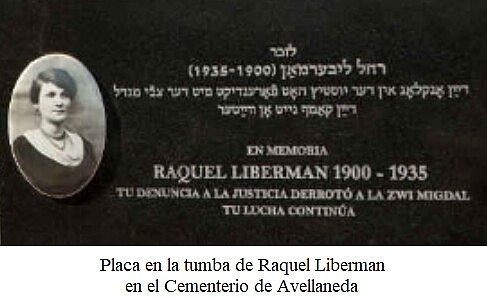
En 2015, cuando se cumplieron 80 años de su muerte, colocaron una placa en su honor en el cementerio de Avellaneda. Durante la Década Infame se decía que ese era «el lugar para enterrar prostitutas y proxenetas». No se sabe dónde está su tumba porque los libros de las parcelas están en Israel. Pero sí que está junto a Iacoov.
Su historia de valentía trascendió en el tiempo. Se escribieron otros libros sobre la Polaca. La Subsecretaría de Derechos Humanos y Pluralismo Cultural de la ciudad de Buenos Aires entrega cada año el «Raquel Liberman Award» a todas las personas y organizaciones no gubernamentales comprometidas con la protección y/o promoción de los derechos de las mujeres sobrevivientes de situaciones de violencia», según dice la página oficial de la Ciudad.
A project presented before the Buenos Aires Legislature requests that the name of Rachel Liberman a la estación Callao de la línea D. La autora del proyecto, la legisladora de UCR-Evolución Patricia Vischi dijo que «nos pareció muy importante que fuera esta estación del subte D porque la vida de Rachel Liberman se desarrolló en esta zona, donde ella fue victimizada, pero también donde, cuando pudo recuperarse, pudo poner un comercio con mucho sacrificio para criar a sus hijos».
Compilation of texts from: Infobae, La Nación. With the news people, Researcher at the José Luis Scarsi National Library. Myrtha Schalom in her book La Polaca demolished all these legends with a formidable research work.
 English
  Español
  English (UK)
  Português do Brasil
  Français
  Italiano
  Deutsch
  简体中文
简体中文  العربية
  Русский
Leave a Reply